
Why Mushrooms Deserve a Place in Your Wellness Routine
When most people think of mushrooms, they think of a tasty addition to stir-fries, soups, sauces, or as a topping (check out some of my mushrooms-included recipes here Grilled Portabella Burgers and Vegetarian Slow Cooker Chili).
But mushrooms are far more than just a culinary ingredient. From supporting immunity and helping the body adapt to stress to promoting mental clarity and healthy energy levels, mushrooms have been treasured for centuries in Traditional Chinese Medicine and are now attracting significant attention from modern researchers.
Whether you’re looking to strengthen your immune system during allergy season, improve focus, manage stress, or simply support long-term health, mushrooms may be one of nature’s most fascinating wellness tools.
Mushrooms Are More Amazing Than You Think
Did you know that mushrooms aren’t actually plants?
Mushrooms belong to their own biological kingdom called fungi. In fact, fungi are genetically more closely related to animals than they are to plants. Scientists have identified a common ancestor shared by fungi and animals, making mushrooms one of the most unique organisms on Earth.
And mushrooms have some truly remarkable abilities:
- Some species glow in the dark. Bioluminescent mushrooms may look like they are AI, but they’re real!
- Certain mushrooms can generate their own wind! By use these self-made air currents to spread spores.
- Fungi are being studied for their ability to clean pollutants from the environment through a process called mycoremediation. Some fungi (e.g., white rot fungi, which roots into the well-known oyster mushroom) can even eat plastics like those from diapers, as well as cigarette butts, oil spills, and heavy metal contaminants. Not an excuse for us to keep behaving badly, as we continue to pollute our planet, but they may help save us from the damage we’re causing!
- Even better than cleaning up the plastic mess we’re creating, mushroom-based materials are even being developed as environmentally friendly alternatives to plastics and packaging materials.
Another of the most exciting things about mushrooms is their role in supporting human health.
The Power of Medicinal Mushrooms
Traditional Chinese Medicine has utilized medicinal mushrooms for thousands of years. Today, modern research is beginning to validate many of these traditional uses.
If you want to try any of these herbs, I do carry most of them, except for the ones you’ll make your meal with.
Reishi: The Mushroom of Calm and Longevity
Nicknamed the “Mushroom of Immortality,” reishi’s (RAY-shee) name in Chinese Medicine is ling zhi, meaning “holy mushroom/herb.” Reishi (Ganoderma lucidum) has long been valued for promoting resilience, balance, and vitality.
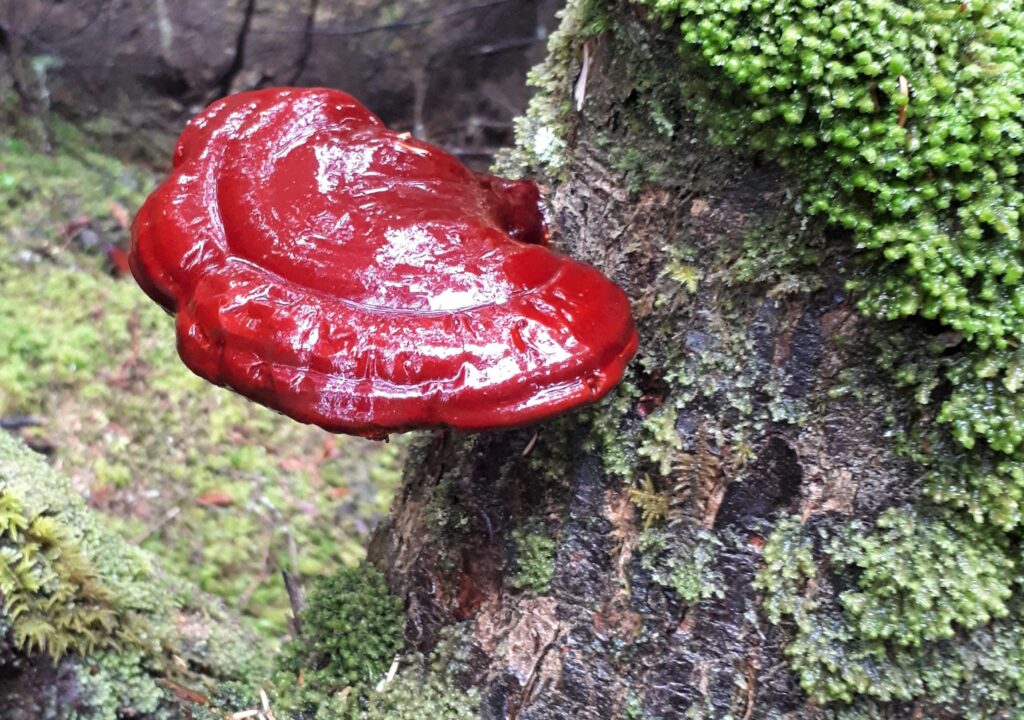
Reishi is considered an adaptogen, meaning it helps the body adapt more effectively to physical and emotional stress. Many people use it to support:
- Stress management
- Better sleep quality
- Immune function
- Seasonal allergy support
- Healthy aging
Unlike stimulants that provide a temporary boost, reishi is often associated with promoting a sense of calm, grounded energy.
I know a ton about reishi now because I write a lot of blogs and articles about it, and it’s one of my favourite herbal remedies. I call reishi the “Queen of Chinese herbs” because it is a Qi tonic that’s categorized in the TCM pharmacopeia as an herb that “calms the spirit” while also acting as an immunomodulator (regulates immune function—boosting or lowering, as needed). Written about in the first book on herbal remedies, the Shen Nong Ben Cao (25-200AD), this medicinal mushroom was once reserved for royalty, thankfully, we regular folks now have access to it too.
If you want it in food format, you’ll probably mostly need to find it in foods that are already bitter, like reishi powder blended with coffee or hot chocolate. The key compounds that you want in reishi are, like many medicinal compounds, extremely bitter. The mushroom itself also has a hard, chitinous (shell-like) fruiting body (the stem and cap that you classically would picture when you think “mushroom”), making the compounds hard to digest if you don’t do something to extract them. Supplements are your easiest access to medicinal dose levels of reishi, so just make sure you get the fruiting body and not just the root-like mycelium found in some pill or powder formats.
Cordyceps: Energy Without the Jitters
If you’ve ever wished for more energy without relying on caffeine, cordyceps (KOR-dee-seps) may be worth exploring.
Traditionally used to support lung and kidney function, cordyceps has become popular among athletes and active individuals because it may help support:
- Physical endurance
- Exercise recovery
- Healthy oxygen utilization
- Sustained energy production
In TCM, it’s called dong chong xia cao, meaning “winter bug, summer herb.” It might freak you out a bit to find out why—it’s a fungus that grows out of caterpillars (or other bugs)—especially if you watch “The Last of Us” or if you watch this fascinating/terrifying old video of David Attenburough’s Planet Earth episode (don’t say I didn’t warn you).
Don’t worry, it doesn’t infect human brains. It’s safe to eat. If you want to geek out a bit, here are some reasons you may want to supplement it, noting that it can get pricy.
Many people describe Cordyceps as providing “calm energy”—enhanced vitality without the crash or nervousness often associated with stimulants.
Lion’s Mane: Food for the Brain
Lion’s Mane is one of the most interesting-looking mushrooms I’ve ever seen. I took this picture when hiking through the forest in Haida Gwaii, and I kind of wish I had grabbed a chunk of this lion’s mane I saw there, but I don’t know the rules or etiquette, so I left it as beautiful as I found it.
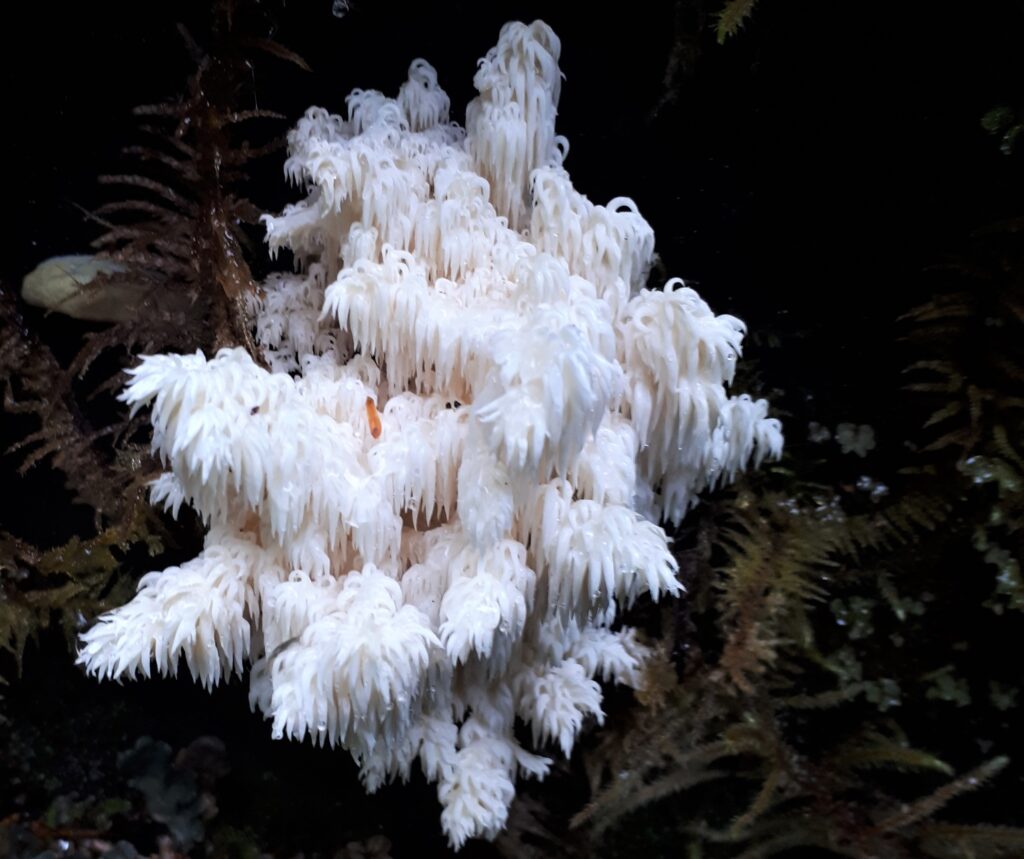
With its distinctive cascading white appearance, Lion’s Mane has gained attention for its potential effects on the nervous system and cognitive function.
People commonly use Lion’s Mane to support:
- Focus and concentration
- Memory
- Mental clarity
- Learning and productivity
- Healthy nervous system function
While this mushroom isn’t an herb I learned about in my Chinese herb studies, it’s touted in TCM to support the digestive system and provide calm energy. I mostly recommend it for its neurological benefits, including for cognitive function, post-concussion (traumatic brain injury, TBI), and nerve injury.
If I had harvested that lion’s mane in Haida Gwaii, I could have made dinner with it, as unlike the previous two herbs I listed, it is a culinary mushroom, but if you’re looking for therapeutic levels, you may want to get the powder or capsule form.
Chaga: Nature’s Antioxidant Powerhouse
Found growing on birch trees in colder climates, chaga (CHAH-guh) has one of the highest antioxidant levels of any natural food source.
Antioxidants help protect cells from oxidative stress caused by environmental toxins, aging, and everyday metabolic processes.
Chaga is often used to support:
- Immune health
- Healthy inflammation response
- Cellular protection
- Overall vitality
Its rich antioxidant profile has made it a staple in many wellness routines.
Don’t Overlook Culinary Mushrooms
While medicinal mushrooms often get the spotlight, common culinary mushrooms offer impressive health benefits as well.
Shiitake
A staple in Asian cuisine, shiitake (shee-TAH-kay) mushrooms contain compounds that support immune health and cardiovascular wellness. They are also a good source of B vitamins and beneficial polysaccharides.
Maitake
Often called the “Dancing Mushroom,” maitake (my-TAH-kay) has traditionally been used to support immune function and healthy blood sugar balance.
Button, Cremini, and Portobello
Even the humble mushrooms found in most grocery stores provide valuable nutrients, including:
- Antioxidants
- Fibre
- B vitamins
- Selenium
- Potassium
Research suggests that mushrooms may contain unique compounds that help support immune system function and protect cells from oxidative damage.
A Traditional Chinese Medicine Perspective
In Traditional Chinese Medicine, health is viewed as a state of balance and harmony. Many medicinal mushrooms are valued because they help strengthen the body’s resilience while supporting specific organ systems and overall vitality.
Rather than targeting a single symptom, mushrooms are often used to support the body’s natural ability to maintain health, adapt to stress, and recover from daily challenges.
Marvellous Mushrooms
The mushrooms you take for your health may not glow in your kitchen or create their own wind currents, but they remain some of nature’s most remarkable organisms.
From reishi’s calming support and cordyceps’ energizing properties to lion’s mane’s cognitive benefits and chaga’s antioxidant power, medicinal mushrooms offer a unique combination of ancient wisdom and modern scientific interest.
Even culinary favourites like shiitake, maitake, portobello, and button mushrooms can contribute valuable nutrients and health-supporting compounds to your diet.
The next time you’re thinking about ways to support your health naturally, consider looking to the fascinating kingdom of fungi. These remarkable organisms have been helping humans thrive for thousands of years, and they may have much more to teach us.