The other day, I caught myself doing something I’ve done thousands of times.
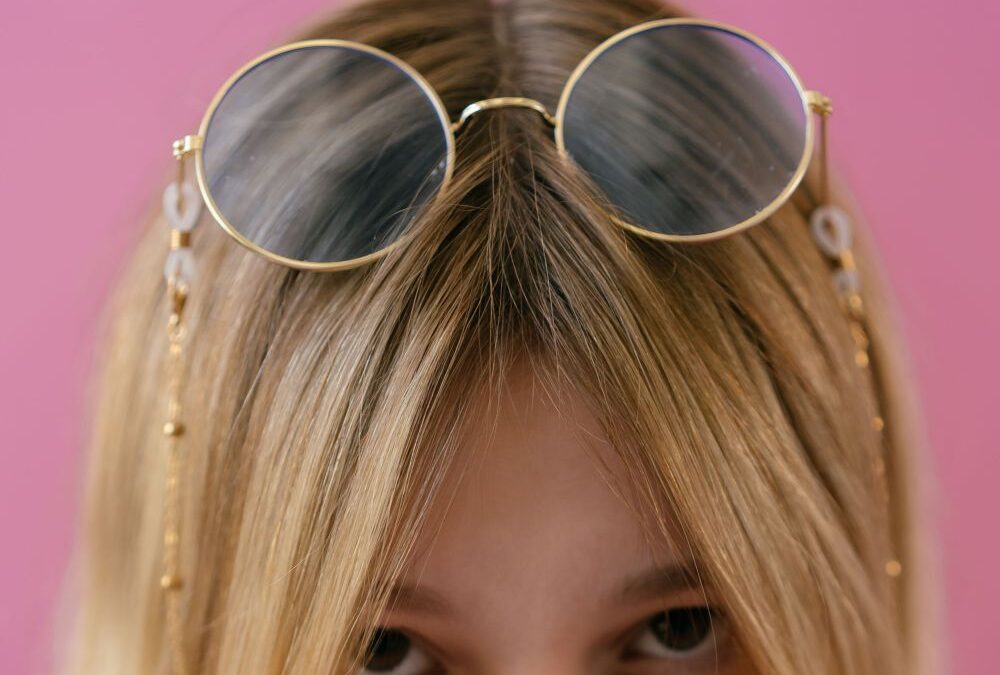
I took my reading glasses off my face and automatically perched them on top of my head.
A few minutes later, as I went to take them off again, I felt the familiar tug. A few hairs were pulled out in the process. Ouch.
The funny thing is that I already have a solution. At a local craft event, I traded one of my books for a beautiful handmade beaded eyeglass chain. It’s practical, attractive, and designed specifically to keep my glasses accessible without using my head as a storage rack.
Yet despite having a better option, I still instinctively keep put my glasses on top of my head.
That’s the power of habit.
Living on Autopilot
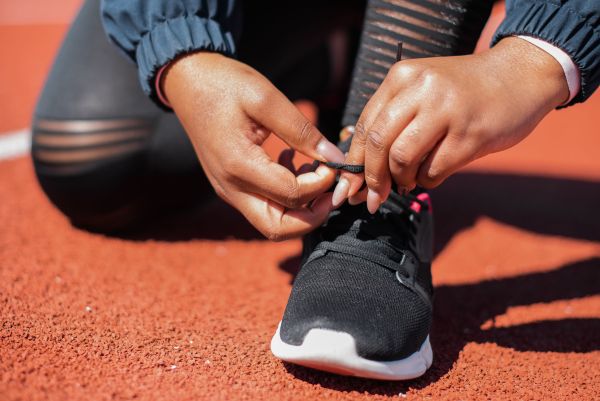
Much of our day is spent on autopilot. Habits allow us to perform routine tasks without constantly thinking about them. Imagine if you had to consciously think through every step of brushing your teeth, tying your shoes, driving a familiar route, or making your morning tea.
Habits save energy. They free up mental space for more important decisions and creative thinking.
In many ways, habits are one of our brain’s greatest gifts.
The challenge is that our brain doesn’t distinguish very well between habits that serve us and habits that don’t. Once a behaviour becomes ingrained, it tends to repeat itself automatically.
Some habits help us thrive. Others quietly keep us stuck.
The Double-Edged Sword of Habit
Positive habits can transform our health over time. Small actions repeated consistently often produce far greater results than occasional heroic efforts. At the same time, unhealthy habits can slowly undermine our wellbeing without us even noticing.
A poor posture pattern repeated hundreds of times a day can lead to chronic tension.
Late-night scrolling can become a routine that steals sleep.
Stress-driven reactions can become automatic responses that increase anxiety and frustration.
The good news is that habits are not permanent. They can be changed, replaced, and improved. The first step is simply becoming aware of them.
Habits I’m Working On
Like everyone, I have habits I’m proud of and habits I’m still refining.
Some positive habits I’ve developed over the years include:
Flossing Daily
Not the most exciting habit, but one that pays dividends. The sad thing is that despite knowing its value—because oral health is HEALTH, and that’s what I talk about all the time—until about 2020, the only time I flossed was if something between my teeth was actually bothering me and before going to the dentist. Of course, my dental hygienist would easily be able to tell I was not a regular flosser because my gums would bleed.
During COVID, I had created a BINGO card with simple health tasks for the residents in the care home where my Nana called home. That got me thinking that it might be helpful to have the same, but with higher complexity and challenges, for others. I even offered a prize at that time, to help with extra incentive. In there, I had “flossed your teeth” as one of the squares, and while I ran this contest, I too did this bingo card daily, and that was an easy task to perform.
And, yet, when the contest ended, I slowly lost that habit. It was only after I had a cavity between my teeth last July that I fully committed to flossing, and I’ve done so every day since. Simply had to decide that it was a non-negotiable must do.
Mindful Eating
When anyone asks me the number one health tip in my nutrition book, Modern Chinese Medicine Food Cures, I answer, “mindful eating.” Not every single one of my meals is consumed with mindful eating because sometimes I do just need to get going, and I am a grazer, so you can often find me chewing on something. But at least one of my meals is consumed mindfully every day. And I spend more time chewing my morning oatmeal than is necessary.
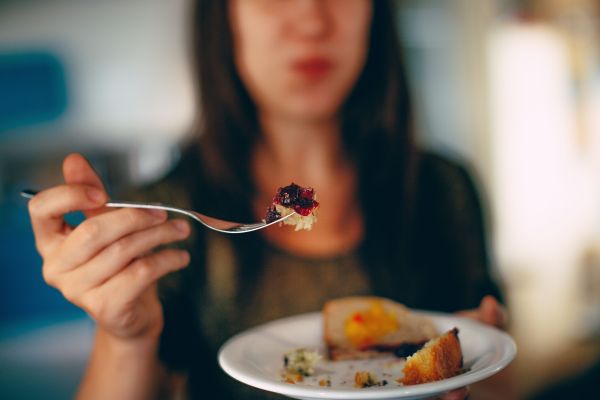
Unless you’re a competitive eater, racing through a meal doesn’t win you a prize. And yet, many of us scarf back our food, barely chewed, as if someone else is going to steal it out of our mouths if we don’t get it down quickly.
It may seem no big deal, but this can:
- Impair your digestion, decreasing your absorption of nutrients
- Contribute to indigestion, heartburn, and acid reflux
- Cause bloating and gas
- Result in weight gain because you lose your fullness (satiety) cues and overeat
- Increase your risk of metabolic syndrome and type 2 diabetes
- Choking because you haven’t chewed well enough
And, of course, it also decreases your actual enjoyment of the food you’re taking in. And eating can be one of the joys of life.
Taking time to slow down, chew thoroughly, and pay attention to hunger and fullness cues can make a tremendous difference in digestion, energy levels, and overall wellbeing. Some things you can do to help you slow down and practice mindful eating include:
- Take a few slow, deep breaths before eating. Perhaps this is while you offer gratitude for your food—also a positive thing.
- Eat with your non-dominant hand.
- Count your chews so you notice if you want to swallow the food after only three chomps, allowing you to remind yourself to chew more.
- Put your utensils down between bites.
- Pay attention to the flavour, the aroma, the texture, and the feelings or emotions (foods are often tied to memories) associated with your food.
Going to Bed Earlier
I used to dislike sleeping. I have a lot of things I want to do in a day, and sleeping seemed to me like an interruption in that, and even a bit of a waste of time. I never understood how someone could love sleep, as my husband does.
Of course, I know sleep is essential. So, for a while, I used to set an alarm for myself to go to bed, and I worked on taming my FOMO. Getting more sleep is helped a bit by the fact that I can’t get away with little sleep the way I used to.
Sleep is one of the most powerful healing tools available to us. Getting to bed at a reasonable hour isn’t always easy, but it’s a habit that consistently improves how I feel the next day.
Shutting Off Devices
Our phones, tablets, and computers are incredibly useful, but they can also become endless sources of distraction. Creating boundaries around technology helps create space for rest, reflection, and connection.
It’s also important to do nothing at times. To let our brains be a bit bored. Two of my patients told me that they’ve talked to their kids about the value of being bored, as it helps with creativity. I agree!

Remember people watching? Do you still do that sometimes or do you pull out your phone and scroll when you’re waiting for transit, for a friend to arrive, for your food to be ready, or in line at the grocery store? I try to remember to just wait sometimes. To sit and observe. Or just sit and let my mind wander. I get so much more out of that than looking at my phone. Again.
Exercise, Stretching, and Balance Training
Movement doesn’t need to be complicated. But it should be something you do consistently. Regular activity helps maintain strength, mobility, coordination, and resilience as we age. It relieves stress too.
I’ve returned to yoga because I enjoy how much stronger I feel when I do it. Both physically and emotionally. But I do get bored doing the same thing all the time, so I’ll also add in VR workouts (boxing or “Beat Saber” dancing) sometimes. Other times, I’ll do some Qi Gong. All of this takes time, sometimes time I don’t feel I have. But I schedule it in, or I integrate it into my getting somewhere. I walk to and from work, yoga, and most other places. And sometimes I’ll simply put on some fun music and do some silly, random dancing while my dog stares at me like I’ve lost it.
There are so many ways to move that you are sure to find something that works for you.
If you want to be able to live independently later in life, you’ll need to be able to do things like get up off the floor or a chair, balance on one leg (remembering that every step you take when walking, you are balancing), carry your groceries, open a heavy door, and unload the dishwasher. And keep doing those movements: squat, balance, pull, push, twist. If you want to do that in 5, 10, 20, 40 years from now, you’ll want to be able to do that now.
If you have pain or functional movement issues limiting your ability to move, ask me if acupuncture can help you.
Improving Posture
“Don’t slouch.” “Stand up straight.” These admonitions aren’t just about how we look. Poor posture can negatively impact our health. One of my dance teachers when I was a kid used to tell us to check our posture every time we walked through a doorway. I don’t do that anymore, but I do regularly check the position of my head and shoulders, in particular. Like most of us, my cervical (neck) vertebrae have lost some of the natural “C” curve that’s supposed to be there.
With the weight of our heads being about the same as a bowling ball (10 to 12 lbs), and most of us having what’s called a “forward head posture,” our poor necks are having to do overtime. No wonder so many of us have neck pain and headaches.
One of my most shared blogs is one I wrote in 2020 about “pandemic posture” because people were working from home, at makeshift workstations. It’s still relevant.
Traditional Chinese Medicine and Habit Change
In Traditional Chinese Medicine (TCM), health is not usually the result of one single action. It is the product of countless daily choices. A foundational aspect of TCM is something called Yang Sheng, meaning “nourishing life.” These are the regular practices we do to nurture ourselves, strengthen our bodies, calm our minds, feed our souls to improve our health and promote longevity. This includes:
The foods we eat.
The quality of our sleep.
How we move.
How we manage stress.
How we think.
The routines we repeat day after day.
TCM practitioners often help patients identify small changes that can create meaningful improvements over time. Sometimes the most powerful treatment isn’t a dramatic intervention. It’s helping someone develop a new pattern that supports healing every single day.
What Habits Are Running Your Life?
Today, take a moment to notice your habits that are operating on autopilot.
Which ones are helping you move toward better health? Which ones might be quietly holding you back?
You don’t need to change everything at once. Start with one small habit that you think will make a difference in your life. For me, the glasses thing is a small one that maybe doesn’t mean enough to me at this time. But when it does, I’ll get a second set of glasses that will always stay on the necklace chain. In the meantime, I’ll keep refining and building on the habits I mentioned above. Because making changes can be challenging but we can keep working on them. It’s worth it.