
If you’re interested in your health, chances are that at some point, you’ve checked with Google and/or some form of AI about symptoms, treatments, medications, and medical conditions, and asked for advice on supplements, nutrition, exercise, or lifestyle recommendations. All this is so readily available, giving us access to a seemingly boundless amount of health information.
Additionally, with your phone mapping your movements and storing your searches, social media algorithms learning what captures your attention, and health monitoring devices (https://activetcm.com/should-i-use-a-smart-device-to-monitor-my-body/ ) tracking your steps, monitoring your sleep, and recording your heart rate and other health parameters, it becomes easier for online systems to know what to answer when you ask.
All that is both a benefit and a detriment.
Key Takeaways
- Technology can help us understand our health issues and provide insight that can help us prepare for our visits with health professionals.
- An algorithm is designed to predict what will interest or engage you, not necessarily what is most accurate or beneficial for your health.
- More information does not necessarily mean better information.
- The knowledge may be available online, but the ability to apply it appropriately to an individual comes from professional education, clinical training, and experience.
- Use technology to become informed. Use your curiosity to ask questions. And use the expertise of qualified healthcare professionals to help guide your decisions and provide appropriate care.
The Benefits: Information at Our Fingertips
Throughout history, new technology has contributed to how we manage our health. Advancements in metallurgy, sterilization, and microscopy have moved acupuncture needles from sharpened stones, bones, horns, and thorns to the precision, safety, and comfort of the needles we have today. Luckily! We can also read research papers, expert articles, and textbooks that are not locally available or in a language we don’t know. Technology is a wonderful thing!

I’m a junkie for information because I love learning, and sharing what I learn. So, having the abundance of information we have at our fingertips when we do a Google search or ask AI is incredible, in my opinion. Though it’s still key to speak to knowledgeable folks about the information you find out—to verify whether it’s true or needs nuance—doing a little pre-visit online research can be helpful.
First of all, many people find their healthcare providers through an online search. That may be how you found me as your Dr.TCM or how you discovered this article. Reviews from other patients can be useful, though it’s always important to recognize that just because someone had a horrible (or amazing, for that matter) experience, doesn’t mean it will be the same for you. But you can get an idea of what you may or may not be walking into.
Doing a little symptom or treatment search may also help you know where to start when working on your health. It can also help you target some questions you can ask your health professional. You can read research, access public health resources, and learn about the things you can do to improve your health.
Artificial intelligence (AI) can take this a step further. AI tools organize large amounts of information, explain complicated concepts in everyday language, summarize research, compare different approaches, and help people prepare questions for healthcare appointments. They can also help identify connections between symptoms, lifestyle factors, medications, and other information that a person might not have considered. But don’t stop there. AI can be a starting point, not an endpoint to your healthcare solutions.
Wearable technology and smartphone applications provide another valuable source of information. Smartwatches, fitness trackers, sleep monitors, and health apps can collect data about your activity levels, heart rate, sleep patterns, and other health indicators. Over time, this information may help you recognize changes in your daily habits and identify patterns worth discussing with a healthcare professional.
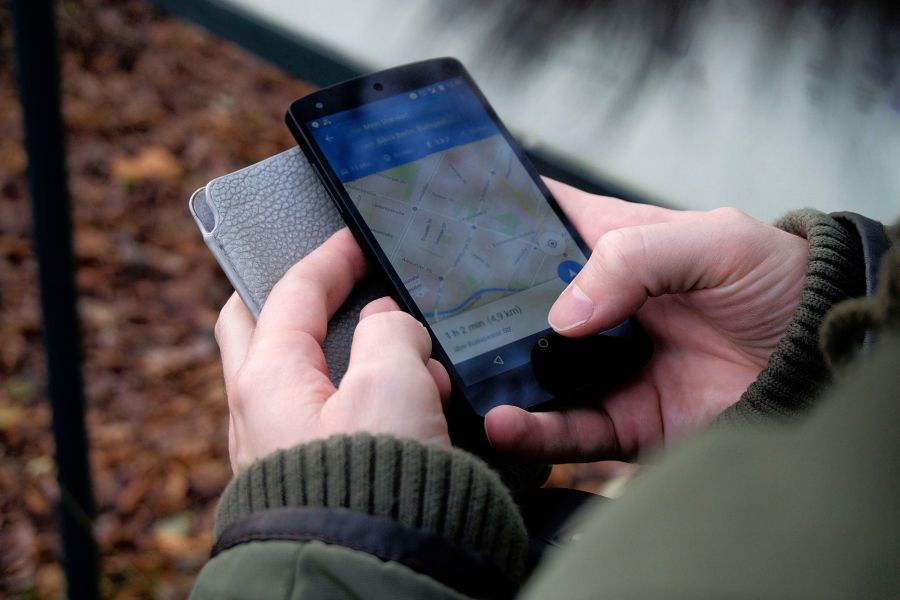
GPS and location-based technology can also influence health-related decisions. Location services can help people find nearby clinics, pharmacies, hospitals, and healthcare practitioners. They can even help identify geographic patterns in health-related information, such as environmental exposures or access to healthcare services.
Used thoughtfully, these tools can support greater health literacy, encourage preventive care, and help people become more engaged in their own health and wellness.
The Downsides:
Your Digital Footprint Is Shaping What You See
But there is another side to this convenience. The information we receive is not always accurate, complete, relevant, or unbiased. Technology can help us make better decisions or find new options, but it can also lead us down the wrong path when we mistake information for expertise. As healthcare becomes increasingly influenced by AI, digital platforms, and data collection, the knowledge and experience of qualified healthcare professionals remain essential.
Your digital behaviour influences the information presented to you. Search engines, social media platforms, websites, and applications collect and analyze different types of information about your online activities. This can include:
- Search history and the websites you visit
- Topics you read about, watch, or interact with
- Location information collected through GPS and other device services
- Shopping habits and products you browse
- Health and fitness information shared through connected applications
- The advertisements you click on and the content you engage with
This information can be used to personalize your online experience. In many cases, personalization is helpful. If you frequently search for running shoes, you may see more information about running. If you research sleep improvement, you may be shown articles, products, and services related to sleep.
However, the same technology can create an information environment that reinforces what you’ve already been looking at.
I’ll give an example. And I may even write an article later specifically about this topic. I have long had issues with my joints. It’s one of the main reasons why I am in this profession—acupuncture and TCM help me! But no matter what I do, I keep going through bouts of injuries or unexplained pain. I now understand that I’m hypermobile. My ligaments and tendons in some areas of my body are weaker and looser than they should be, which is great if you want a party trick or two, but not great when the body has a hard time with joint stability. While it may mean some areas are super flexible, other body areas might be extra tense, as the muscles step into overtime tension to create the support structure. This can lead to more pain and injuries.
So, I started reading about it. That’s super interesting for me and helpful for my patients, as I’m now aware of a whole new area of questions I can ask around their symptoms so that I can expand my recommendations. But it also means I’m bombarded with videos, links, and ads about hypermobility. Because my online experience has become dominated by information about hypermobility, this can create the impression that the condition is more common than it actually is.
The same thing can happen with health products, supplements, diets, and treatment approaches. Once you show interest in a particular topic, algorithms may continue presenting you similar information, sometimes making a product or approach appear more widely accepted or scientifically established than it really is. The important distinction is that an algorithm is designed to predict what will interest or engage us, not necessarily what is most accurate or beneficial for your health.
A search result appearing at the top of Google does not automatically make it the best source of health information. A video with millions of views does not necessarily represent professional consensus. And seeing the same claim repeated across multiple websites does not mean those websites are independently verifying the information.
Sometimes, they are simply repeating one another.
AI Might Be Wrong or Inaccurate or Incomplete for Your Situation
AI has introduced a particularly interesting development in how people approach their health. Rather than searching through individual websites, you can now ask an AI tool questions in a conversational way:
- What might be causing these symptoms?
- What are the differences between these treatment options?
- What does this laboratory result mean?
- Could these symptoms be connected?
- What questions should I ask my healthcare provider?
- What does the research say about a particular supplement or treatment?
These are valuable applications, as AI can make complex information more accessible.
However, AI-generated information is not the same as a professional health assessment. AI works by identifying patterns in information and generating responses based on those patterns. It does not automatically know which details are missing from a person’s health history, whether a symptom has been described accurately, or how different aspects of that person’s health interact in real life.
There is also an important difference between knowing what a condition looks like in a textbook and understanding how it presents in an individual. In TCM, it’s all about personalization. Your situation is unlikely to fit exactly what has been written about someone else. You may have several symptoms that overlap with different conditions. Your age, medical history, medications, lifestyle, family history, physical examination findings, and other factors may all influence what those symptoms mean.
And AI is notoriously confident.
An answer can be detailed and sound definitive. But that doesn’t mean it’s necessarily correct. In fact, AI is setup so that it comes across as authoritative, but it is also designed to be agreeable so that you’ll keep coming back for more. Check out this Science Adviser article on how AI is nearly 50% more likely to agree with a user—or worse, be “sycophantic,” as this article describes it—than humans, even when the user is engaging in unethical, illegal, or harmful behaviours. Even worse, the longer the chat goes, the more the AI mirrors the human user and reinforces one viewpoint instead of offering objective alternative perspectives. This is because humans prefer to have their views backed up and supported, and AI developers are selling a product that needs users.
How you phrase your question may alter how it answers you. I’ve tested that and found that if I ask AI a question and then challenge its answers with something like, “Is that true?”, “Provide documented evidence” (and then check to see if the link is actually related because, spoiler alert, sometimes it isn’t), “Is there another possibility?”, or “What about…?”, I sometimes get a completely different answer. Of course, that means that the increased use of AI is increasing our environmental burden, so consider that if you’re going to push back on AI.
An AI tool can help explain possibilities, but a qualified healthcare professional brings clinical knowledge, assessment skills, professional judgment, and the ability to adapt recommendations to the individual.
Companies Pay to Advertise to You
News flash. Google, ChatGPT, and other search engines and AI companies are in it to make money. And the vast amount of data they collect from you—what you search, where you go, what you browse, what you buy, and even your health markers like heart rate, sleep patterns, and level of movement activities—is valuable.
Check out this article about how visits to the hospital for leukemia treatments can result in an assault of unsolicited ads for cancer cures from companies that pay for data brokers to provide them with information about smartphone location data. While healthcare providers and the clinics that provide healthcare services are required to meet confidentiality requirements, your location data doesn’t offer that protection. Shutting off your phone’s location services can stop this, but you’ll use access to things like GPS to get where you want to go or “find your phone,” if you lose it.
Another study showed that instead of providing valid information based on research, health authorities, or health experts, nearly a quarter of the answers to questions like, “Are stem cells good for autism? Can stem cells cure Alzheimer’s disease? Can stem cells help with cerebral palsy?” pointed to for-profit businesses selling treatments that they said were not validated or properly vetted.
Becoming an Informed Healthcare Consumer
I’m not suggesting you should stop using technology to learn about your health.
Technology can help you become better prepared and more engaged participants in your own care. Being informed, asking questions, and taking an active role in your own healthcare are important.
The key is to use it as a tool rather than treating it as the final authority. It can offer a good starting point.
Here are some practical ways to make technology work for you:
- Use online searches to learn, not diagnose. Research unfamiliar terms and treatment options, but avoid concluding that you have a particular condition based on search results alone.
- Use technology to prepare for appointments. Ask it to explain unfamiliar terminology, summarize questions you might want to ask, or help you understand the differences between available treatment approaches.
- Keep track of relevant health information. Symptom patterns, sleep changes, activity levels, and other observations can be useful when shared with your healthcare provider.
- Be mindful of your digital footprint. Review privacy settings and understand what information your apps and devices collect, particularly when using health-related applications.
- Look beyond the first search result. Seek information from credible, qualified, and independent sources rather than relying on rankings, popularity, or advertisements.
- Discuss supplements and treatments with a qualified professional. Even products described as natural or widely recommended may not be appropriate for everyone.
- Seek professional advice when something changes. New, persistent, worsening, or concerning symptoms deserve appropriate assessment rather than repeated online searches. Urgent or severe symptoms should be assessed promptly through appropriate healthcare services.
- Choose healthcare providers based on qualifications and expertise. Make sure the person providing your care is appropriately trained and licensed or registered for the services they offer.
The Value of Qualified Healthcare Professionals in an AI-Driven World
As technology makes information increasingly accessible, the value of professional healthcare expertise becomes even more apparent. Healthcare is not simply about collecting information. It’s about interpreting it, understanding the individual, recognizing patterns, assessing risks, and determining the most appropriate course of action. For. The. Individual.
A qualified health professional, instead of an SEO-driven TikTok video, is also held accountable for the information they provide you. We are speaking to you, the patient, not to the masses who are targeted by companies who pay for views.
And, of course, there is true value in the human experience. The chance to ask questions, tell your story, and build a therapeutic relationship with a real person cannot be fully replaced. Your best friend will (or should) tell you when you’ve got something wrong or when you’re going to harm yourself. They have your best interests at heart. Your healthcare provider should do the same.